Tone – 31 Hex Systems
From guitar to gubbins, or Swmbo's description "middly-moddly". The musical journey through grandiosity, bleeps and bloops, to sanity.

John Williams thought he might arrange something for the Ovation stereo classical that came in to Rose Morris in ‘78 or ‘79, when I was there, and around the time he, Kevin Peek et al were putting together their MOR/New Age band Sky. I don’t remember it going any further than that, probably because as soon as they could they switched over to electrified Takamines to get a more comfortable playing position. (Remind me to tell you about that Takamine pickup…)
The stereo Ovation’s 6 pickup crystals were connected in two chains to give a split output with odd numbers on one side, even numbers on the other. I tried it in spite of my initial thought ‘Oh no! Two amplifiers!’ and a memory of the New Cross Harp dance hall stairs. My second thought was the likely negative reaction of all the grumpy Luddites I’d worked with in pub bands and how they’d feel about having me in two places at once. I tired quickly of doing juvenile ping-pong licks on this guitar, and as they were driving everyone within earshot towards murder, I put it away before trouble broke out. I don’t know where it went… the ‘chicken in a basket’ cabaret circuit perhaps?
There was possibly a pleasant rhythm guitar odd/even stereo spread if a mix was already thick, avoiding the need to restring a guitar to Nashville tuning ‘angel hair’, but still... two amps...and these were the days when a Twin Reverb was de rigueur. Perhaps it might have been more feasible in our current days of putting everything in the p.a., but back then – was it worth all that arm-wrenching, knee-banging, Sisyphean hassle? Well, no.
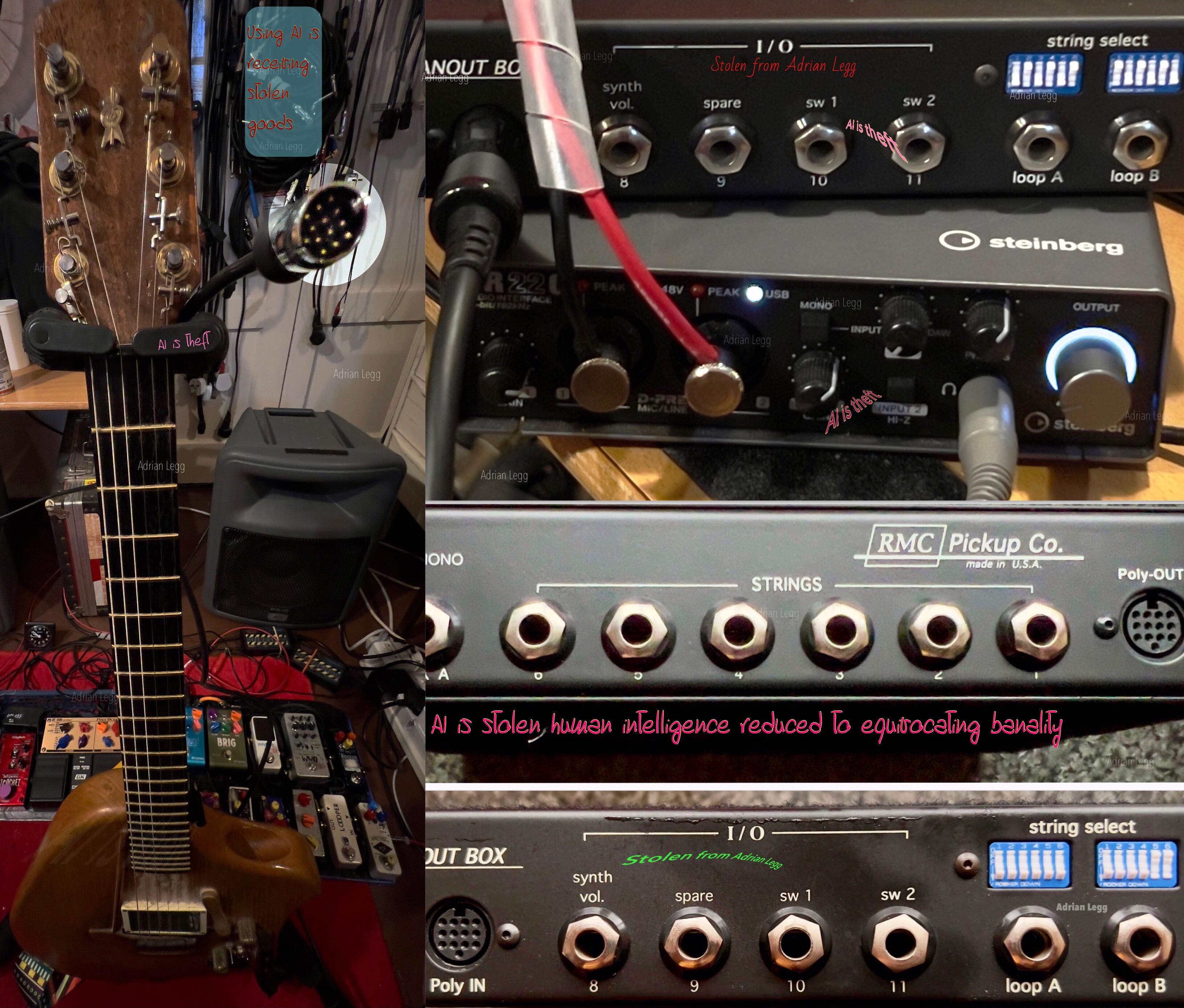
I made two quick and dirty recordings here of the two pickup types via an RMC fan-out box so you can hear the odd/even string split and compare the magnetic hex GK pick-up with Graph Tech piezos. Each one went into the fan-out box via a hex cable, odds and evens were selected in the switches for mixes A and B respectively, their outputs on the other side into the USB interface. I recorded them in stereo hard left and right. Loops A and B on the switches side are TRS sockets for running Y cords through separate effects loops so we could maintain stereo and encompass our doubled-up effects.